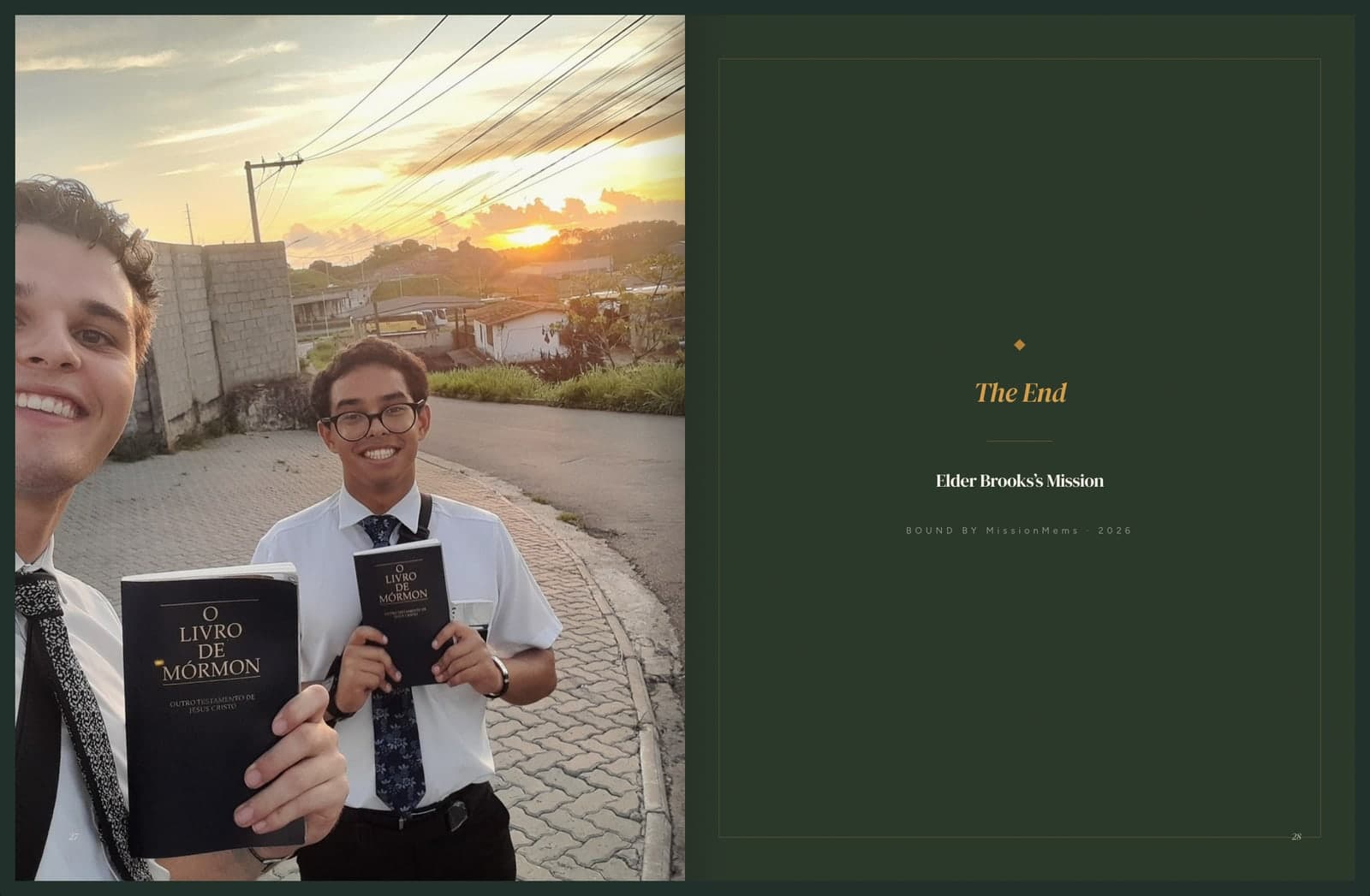
Nothing in a MissionMems book is written for you. The weekly emails already exist, the photographs already exist, and what we do is read them once, work out the shape of the mission from them, and set that in type. This is the whole of it, start to finish, with the parts that are automatic and the parts that are yours marked out as we go.
Two ways in
There are only two situations, and the book comes out the same either way. The difference is only how the letters reach us.
- Already home— last month or ten years ago. A Google Takeout export carries every weekly letter in a single file. Photographs come across as a folder you drag in. It works from a parent’s mailbox too, which matters once the missionary account has closed — and it closes about ninety days after release.
- Still out. The mission gets its own private email address. Add it to whoever sends the weekly letter and each one files itself as it arrives, with its photographs. Nothing to remember, the whole way through, and nothing to rescue at the end.
A mission, reassembled from its own letters
A mission has a structure, and almost all of it is already sitting in the letters. Transfers surface from subject lines. Areas come from the gaps between letters rather than from anything you have to type. Companions and the people baptized come from the names that recur, week over week. What comes out is a timeline — and the timeline is what becomes the chapters.
Worth saying plainly, because other services imply otherwise: none of this is face recognition. Nothing here looks at a pixel to decide who is in a photograph. Companions are read out of the letter text by name, which is both more accurate and a better story — the person is in the book because the missionary wrote about them.
Not one sentence is written for you
When a page carries one line set large, that line is chosen, not composed. The letter’s own sentences are numbered and one is picked by number, so the text on the page is read back out of the letter rather than out of a reply. A paraphrase is not something we decline to write. It is something the pipeline cannot physically produce.
You can pick a different sentence, write your own, or print none at all. The same goes for everything else on the page: you see the whole book before you order it, and you can change any of it until you do.
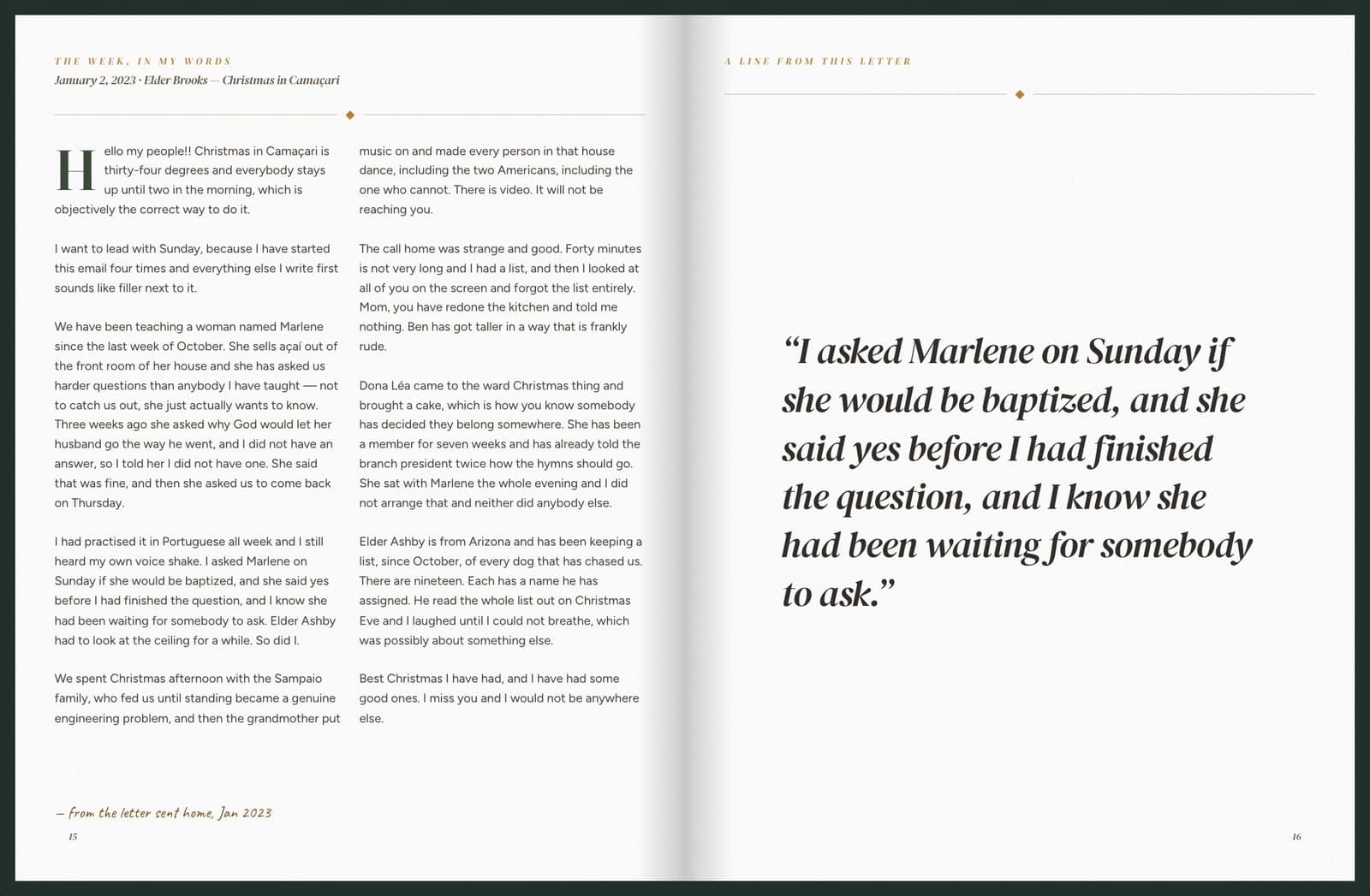
What arrives
One size, made properly, rather than a menu of tiers. 8.5 × 11 inches:
- Hardcover with a printed, gloss-laminated case and white end papers
- Your photograph on the front, the missionary’s name on the spine
- Heavy 100 lb gloss paper
- Every page in full color, printed for photographs
From $200. $200 covers up to 250 pages, then 50 cents a page after that. Most missions come to between $200 and $225. If the missionary is still out, that first $200is paid when you start — it keeps the mission inbox running for the rest of the mission — and it comes off the total at the end. Either way you read every page before you confirm the order.